


What are the Different Lomo Kino Films?
With the stable of Lomography Kino films now including four different emulsions - Berlin, Potsdam, Fantome and Babylon - we thought it high time for a summary article on their relative strengths, and top tips for achieving photographic greatness! Huge thanks to Hannah Brown - the brains behind Lomography UK Marketing - for helping us with the below.
Berlin Kino 400
The Berlin Kino B&W 400 film was released at the tail end of 2018 and was the first in the Lomography Kino series. Inspired by the New German Cinema sweeping through Europe in the 1960s, these films are extracted from rolls of cine film produced by a legendary German company that has been changing the face of cinema since the early 1900s. It is available in 35 mm and medium format.
The Berlin Kino B&W 400 is the perfect monochrome film for us Brits with our changeable weather. It has a great tonal range and can be used in sunshine, storms, under grey clouds and in evening settings too. ISO 400 gives you just that extra bit of leg room for when you’re out and about and things turn gloomy.
The strong monochrome tones of this film are going to give your photos a dynamic pop! With that in mind, try taking it with you to a dramatic place, a bridge, landscape or wind swept street for a really cinematic effect.
(c) Leonard Gecse
(c) Marie Yako
Lomo Top Tip
Add unmistakeable analogue charm to your photos by shooting with the Sprocket Rocket camera for panoramic shots complete with exposed sprocket holes.
(c) Charlotte Rea
Potsdam Kino 100
Just like Berlin Kino film, Potsdam Kino B&W 100 film is extracted from rolls of German cine film and gives a truly evocative aesthetic. Also available in both 35 mm and medium format, the question is, which one do you try first?
The lower ISO of the Potsdam Kino means you’re going to get a slightly softer, fine grain – perfect for situations where you need that extra bit of detail. If you have a studio set up this would be perfect for portraits and still life photography. If you’re out shooting in the day, open the aperture up for some short depth-of-field close-ups to really bring this black and white film to life.
(c) Gallery Tam
(c) Helena Dietenberger
(c) Charlotte Rea
Lomo Top Tip
Try double exposing this film, the low ISO will give you enough room for that extra exposure and you’ll get some weird and wild results from a bit of experimentation.
Fantôme Kino ISO 8
The Fantôme Kino B&W 35 mm film is the third in the B&W Kino family and has an ISO of just 8, that’s Lomography’s lowest yet. This panchromatic emulsion, taken from a roll of German cinematic production film gives a smooth, soft, almost painterly look to your photos with punchy high contrasts, reminiscent of our favourite Film Noir classics.
Fantôme Kino packs drama into the frame with super bright whites and rich, velvet blacks. Tailored for those who like to take full manual control into the great outdoors or experiment with flash photography, Fantôme fans around the world have embraced the low ISO limitation to emerge with some extraordinarily impactful shots.
As the British nights draw in, give Fantôme Kino plenty of time, and capture those wistful winter scenes in all their glory.
(c) Alfred Gerke
(c) Dannah Gottlieb
(c) Banyong Ngamwilai
Lomo Top Tip
This low is film makes it perfect for pinhole photography. Try this out with the Diana F+ pinhole setting for long, lingering exposures and spooky, ethereal effects.
Babylon Kino ISO 13
The Babylon Kino B&W ISO 13 35 mm film is a triumph for the film world. Coming from a roll of German cinematic production film, this panchromatic emulsion yields low grain, sharp detail and a soft tonal gradient to give your monochrome photos a whole new perspective.
This film works beautifully for portraits and a studio set up. Alternatively, take it with you on your travels. You may need to open your aperture a bit wider and pause before snapping away but don’t let this deter you. Just take things a bit slower with this film, and you’ll find the results are completely unique.
(c) Tung
(c) Hamish Gill
(c) Chowarit Sungsomsak
Lomo Top Tip
Make the most of the low iso and experiment with long exposures with a mix of static and moving objects.
Sold out
Sold out
Sold out
Sold out
Sold out
Sold out
Ready to dive in?
Keep Reading
View all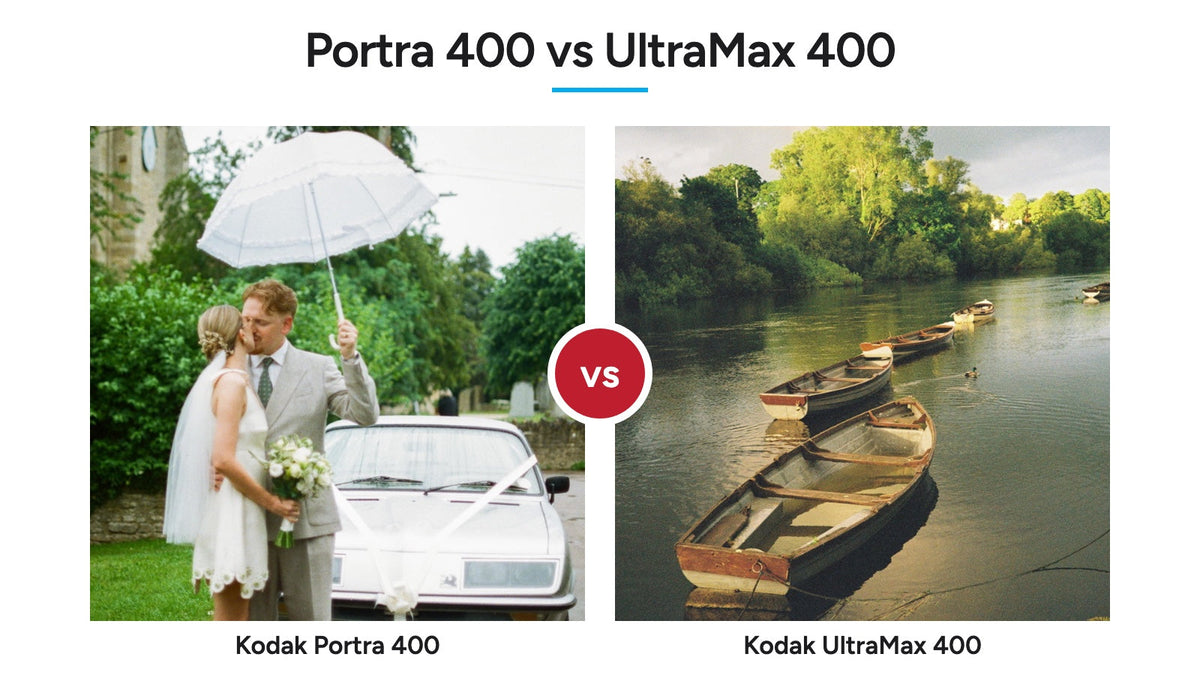
Kodak Portra 400 vs UltraMax 400: is Portra worth the extra?
Portra 400 or UltraMax 400? Same speed, same manufacturer, very different films. So let's compare colour, skin tones, grain, latitude and price per frame, with real photos from our community, including one wedding shot on both.

Which Film Should I Buy? Ask Our Wall of Inspiration 📸
Not sure which film to buy? Type what you want to shoot into our new Wall of Inspiration and see real customer photos, the film each one was shot on, and a button to add it to your basket.

- Opens in a new window.