




Description
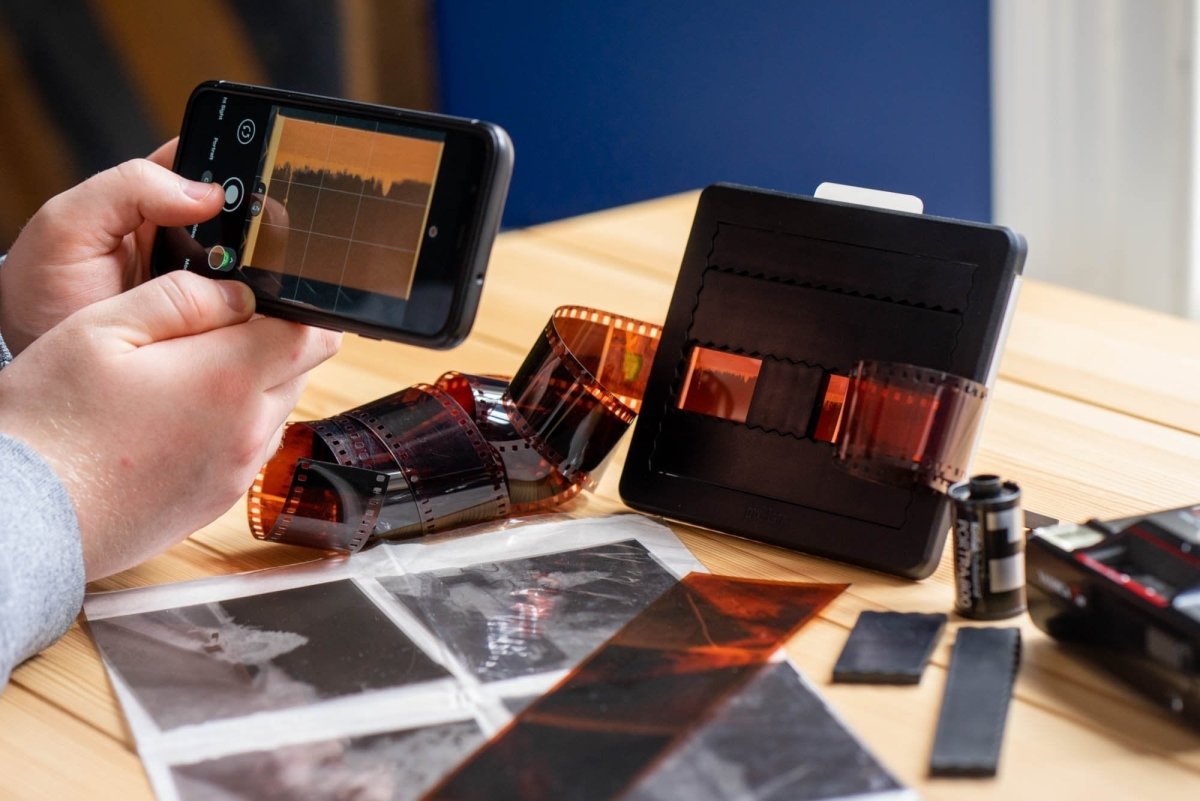
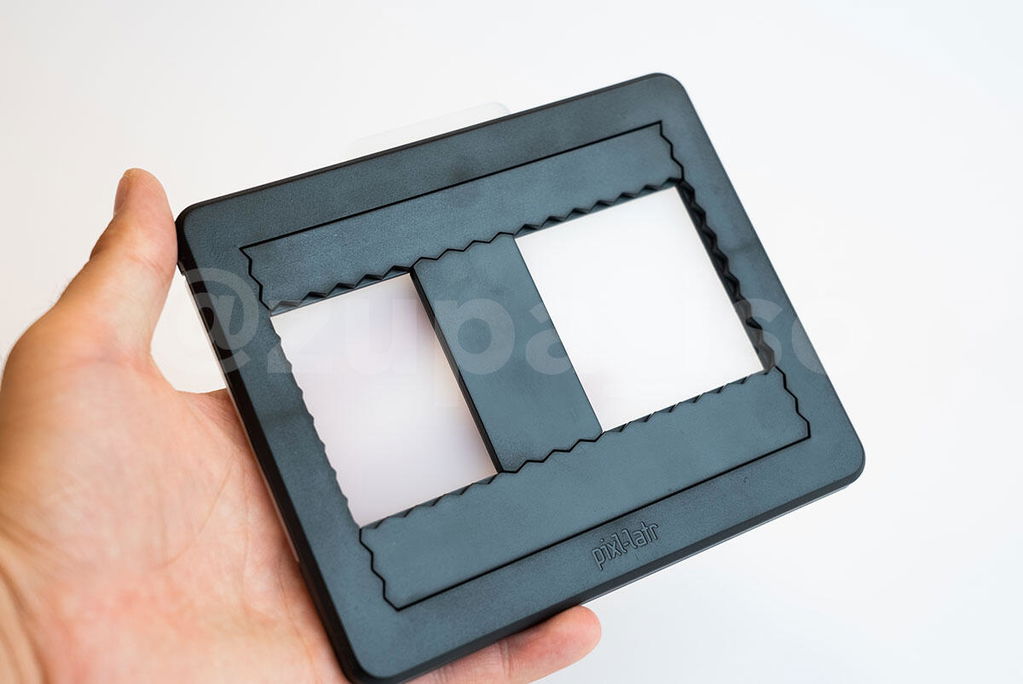
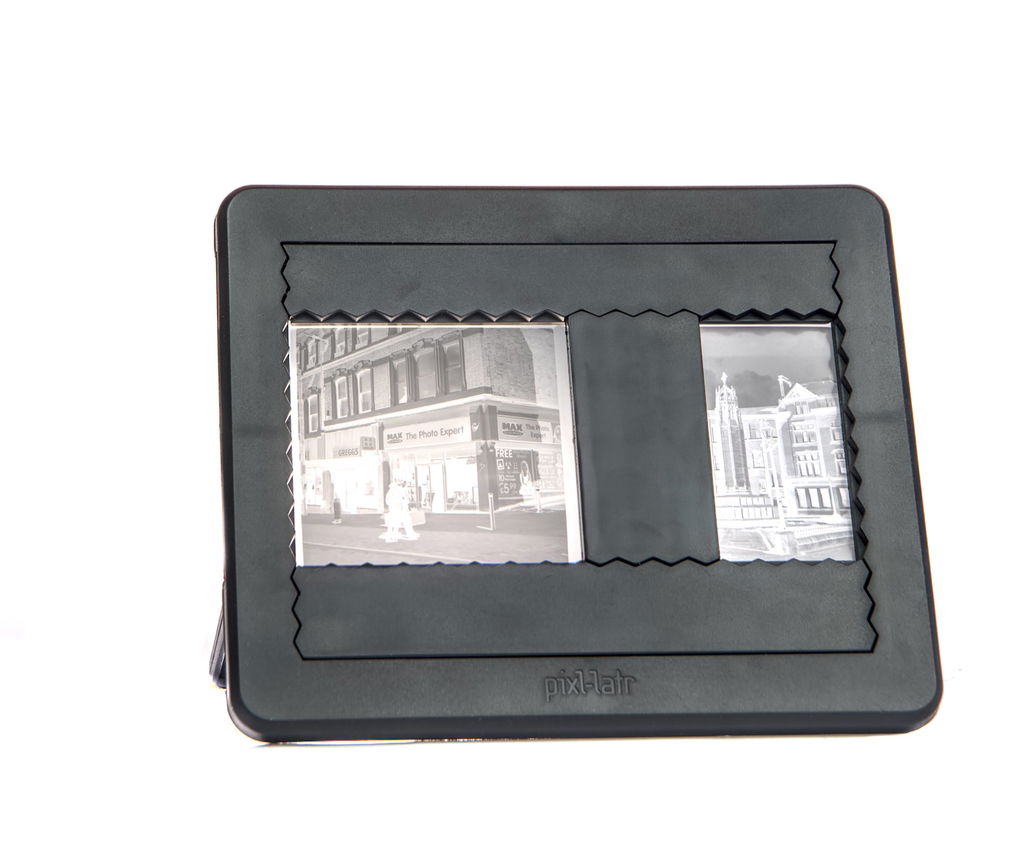
The pixl-latr is a smart and simple solution to home-scanning.
Are you looking to get your film photos from your negatives onto your computer or phone 🤳🏼 but don't want to invest in a flatbed scanner?
pixl-latr is here to help! And it works across 35mm, medium format, and 4x5 large format - with further options available for 110 or APS (printing files downloadable from https://www.pixl-latr.com/community-gate-house/)
Simple, fast, and effective digitising.
When first launched on Kickstarter in 2018, pixl-latr was backed by over 2,000 film photographers 🙌🏼 and is now available for direct sale from Analogue Wonderland!
This latest version (v1.3) includes some modifications and improvements to the original design and is officially "Recommended" by Amateur Photography magazine.
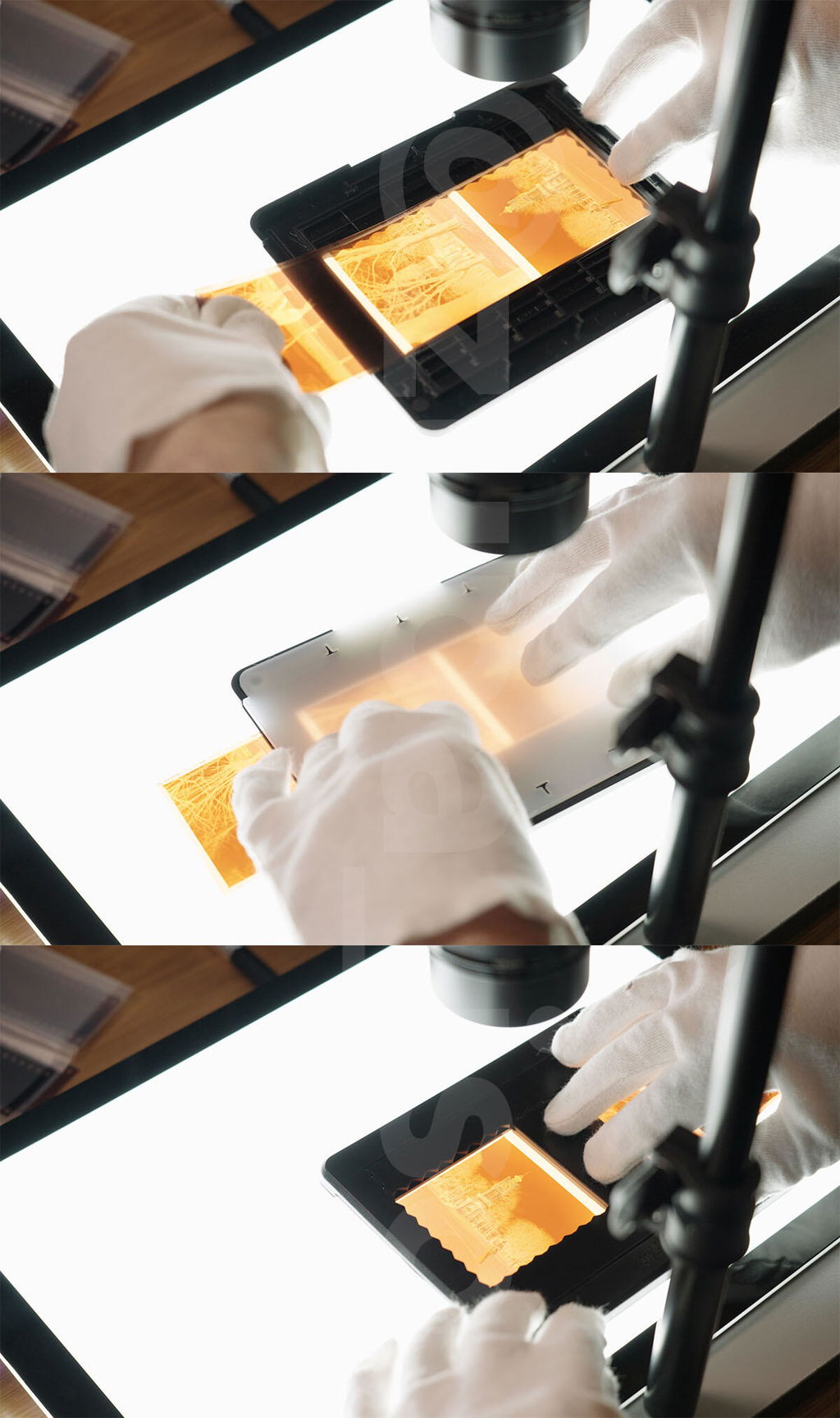
How it works
Find out more
For more information, and a detailed guide to how pixl-latr works, then head over to the pixl-latr website here

Payment & Security
Your payment information is processed securely. We do not store credit card details nor have access to your credit card information.
Customers also bought these
I bought the pixl-latr to digitise medium format film images. I’d already built a jig for copying 35mm film. Finding, re-cherishing and re-using the medium format camera set me thinking. I could revisit the many films in the albums I’d just found as well as those about to be taken with my newly discovered re-invigorated interest in film, hence the purchase.
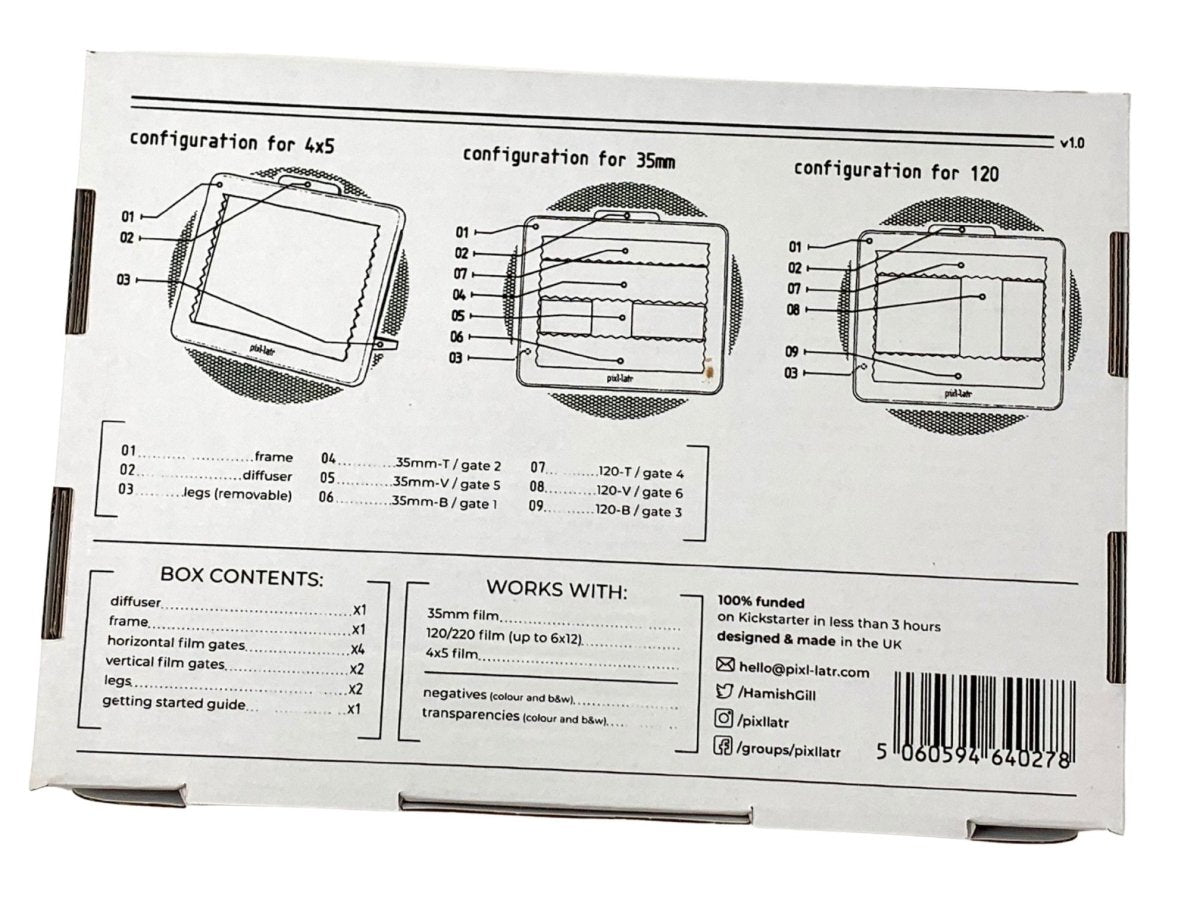
pixl-latr arrives well packaged in a sturdy box together with an instruction booklet. The booklet is informative and helpful. Pity the pages weren’t numbered to allow the contents page to be more useful. The pieces of pixl-latr are well made and fit together well. I’m not certain how long the locking tabs/lugs will last with continued use. To allow different film formats to be used, the interlocking pieces can be moved around. The assembly is fairly intuitive. The diagrams on the reverse of the box show the most common configurations. My first recommendation is NOT to cut your negatives into short lengths since otherwise they will stray in the holder making it tedious to relocate them. Single negatives are a nightmare to locate in this mask.
However, one of my interests was making multi layered images from many layers of derivatives, and these thicker “packs” of single images do not wander as much in the gate of the mask.
On a more general note, colour images used to be made via an enlarger or viewed via a projector, of which the colour temperature was quite low compared to daylight. Finding an illumination source of right temperature to match this to arrive at an acceptable colour balance, and then post processing accordingly is my second recommendation. An old Fuji HR100 film was best at 3200K.
Two legs are provided to allow the mask to sit at angle so that other back illumination sources are possible. Nice idea if the negatives in the unit are firmly held.
On my first attempt I set up a brand-new lateral stem tripod with which I was unfamiliar, then the pixl-latr, and photographed 12 120 6x6 colour negatives in about 45 minutes, which I feel is acceptable, and, I’m sure, can be bettered in time. About the same amount of time was spent on post processing. Again with confidence and practice I’m sure this will be bettered. On the second and third attempts, with negative strips which were uncut, the feeding of film and image capture was much faster because the film was captive. About 15 images of 645 size were captured in about 10 minutes, with processing in Lightroom in about the same time. Subsequent fine tuning of the colour temperature of the images did require an excursion into Photoshop.
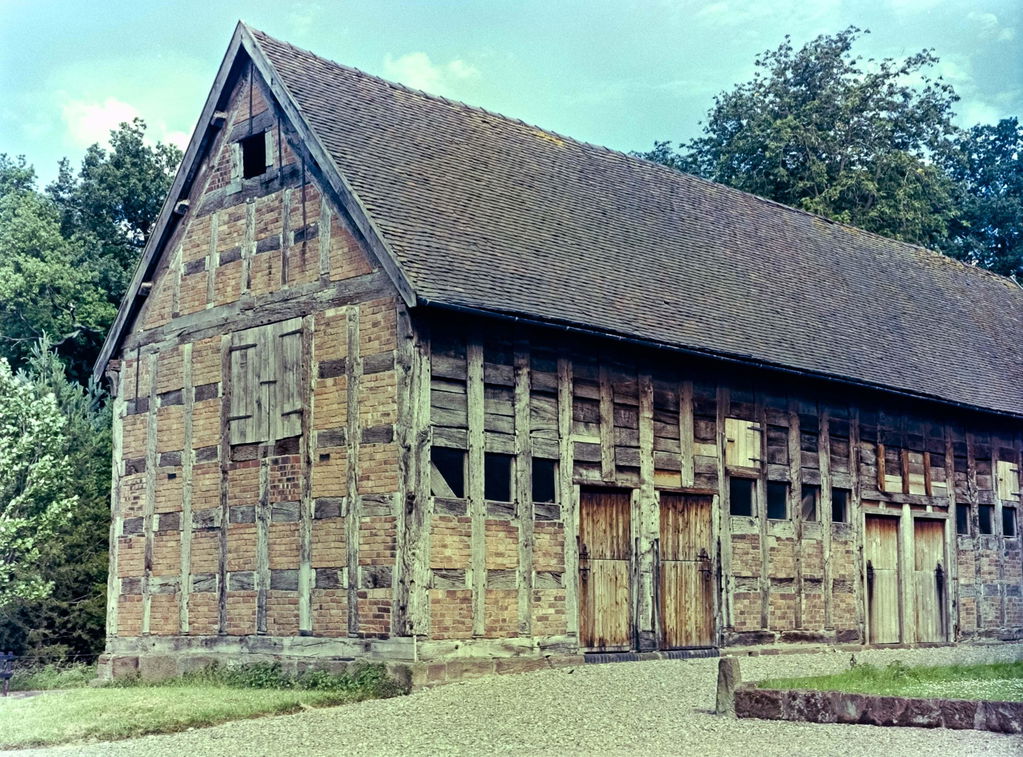
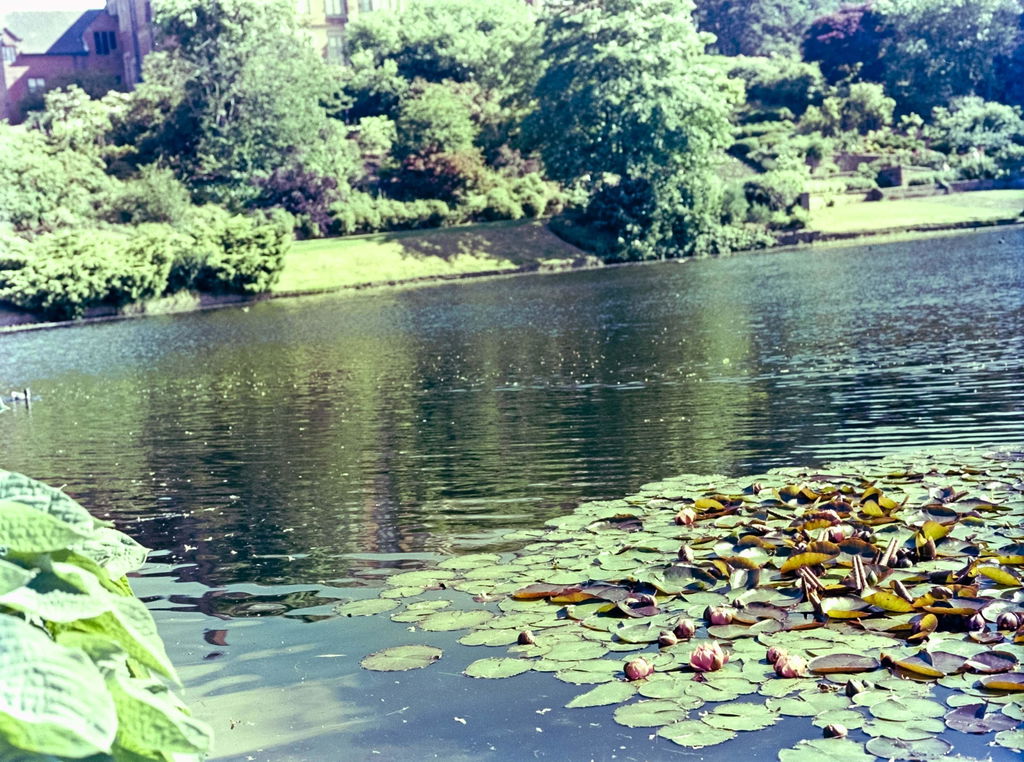
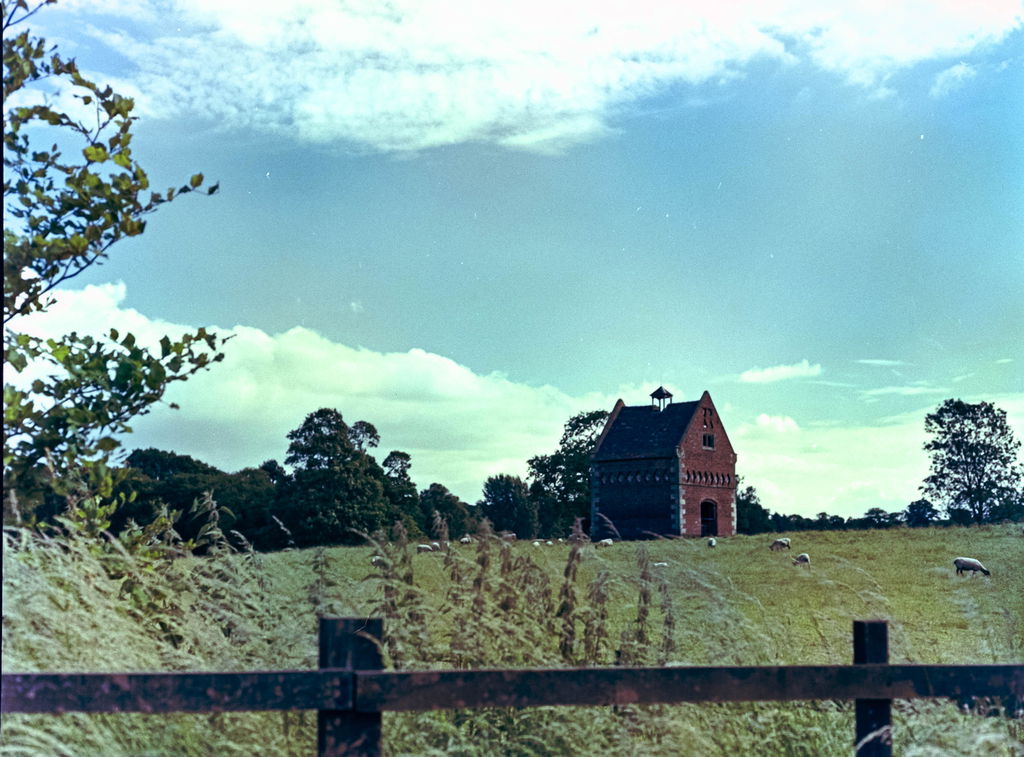
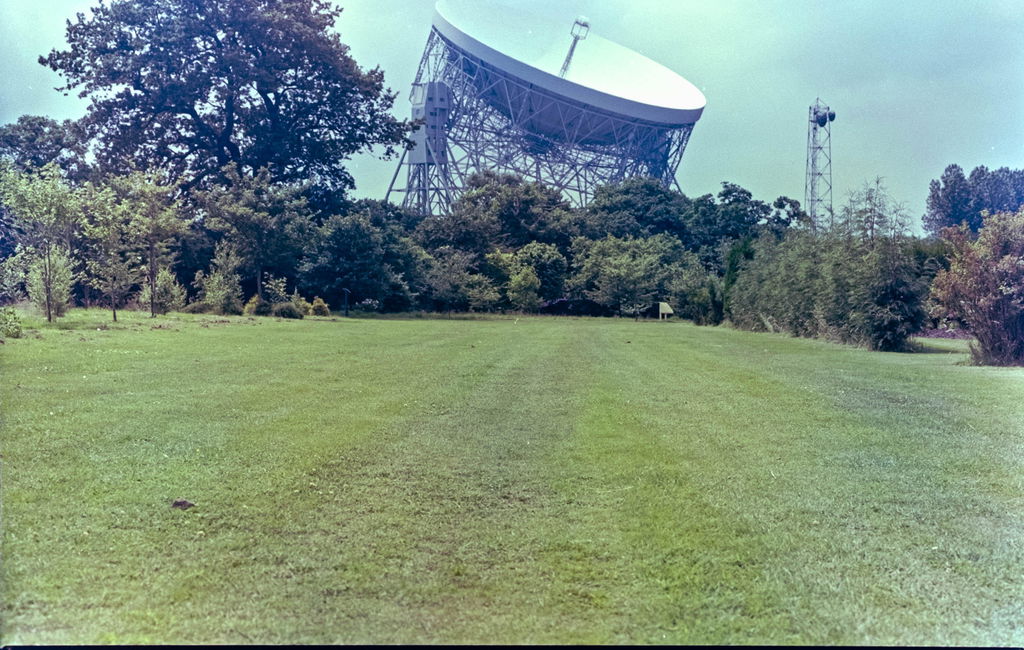
I purchased this to scan my negatives with as I now want to be responsible for taking, developing, scanning and eventually printing my own shots. I have combined using this with Negative Lab Pro and I have been very pleased with the results. It takes minutes to set up the hardest bit is getting the focus right on the negatives, once that's sorted I can whiz through a 36 exposure film in minutes. I just need to set up a permanent copy stand to make life easier as its the setting up of the camera that takes the time.
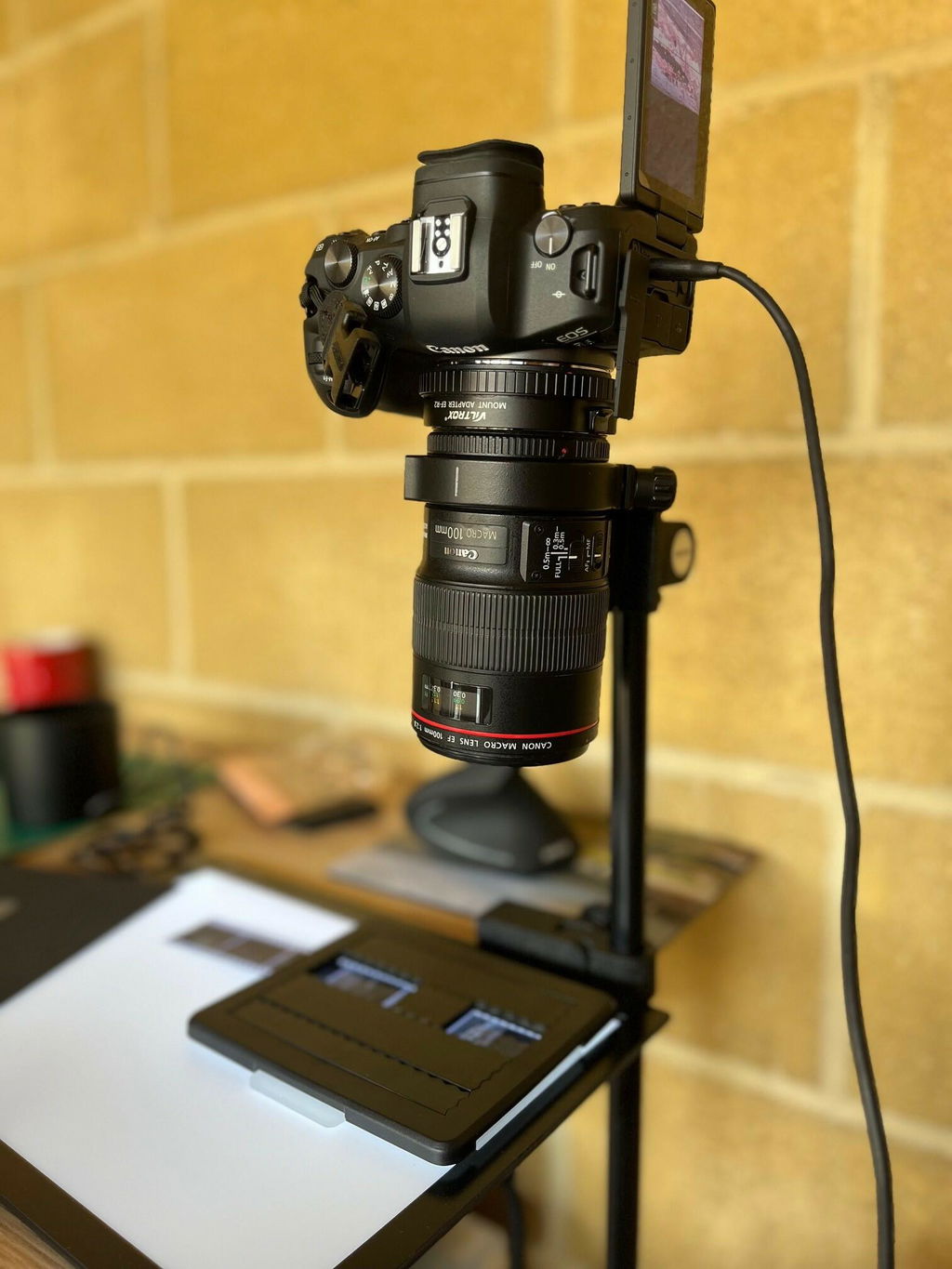
It's a decent, although rather basic, scanning mask for home DSLR/mirrorless scanning. It's modular construction allows for scanning multiple formats (135 film, 120 film and even bigger formats which I haven't tried).
Pixl-latr is easy to use but a bit flimsy, especially when it comes to holding the film in place when changing frame. The weakest point is after you've placed your film in the mask and you need to flip the mask over so the diffusion panel is at the bottom. As there are no firm clips to hold everything together, the film stripe often moves a bit while doing it so you need to fix the alignment. Also every time you want to advance the film you need to open it up, move the stripe, fix alignment etc. So the process is a bit fiddly and can take a bit of time.
But once you get used to the whole process, pixl-latr might be a good budget solution if you don't scan a lot of film. It's well built and the diffusion panel turns almost any light source into a soft light you need to scan the film. Remember that the quality of your scans will mostly depend on your camera, lens, light source etc. Scanning mask plays far less important role here.
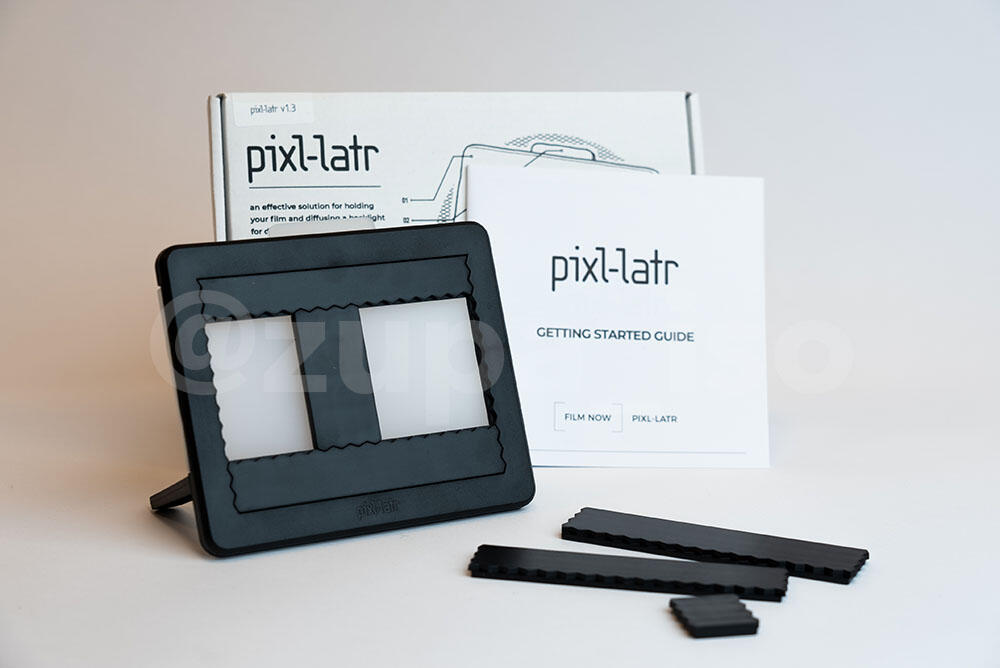
All film sizes in one. Brilliant! I made a plywood lightbox, fitted it with a cheap LED diffused light 240v which supports the mask giving an even light source. This cancelled any light shadows from the taking lens appearing on the negative. Well worth the money. Buy one!
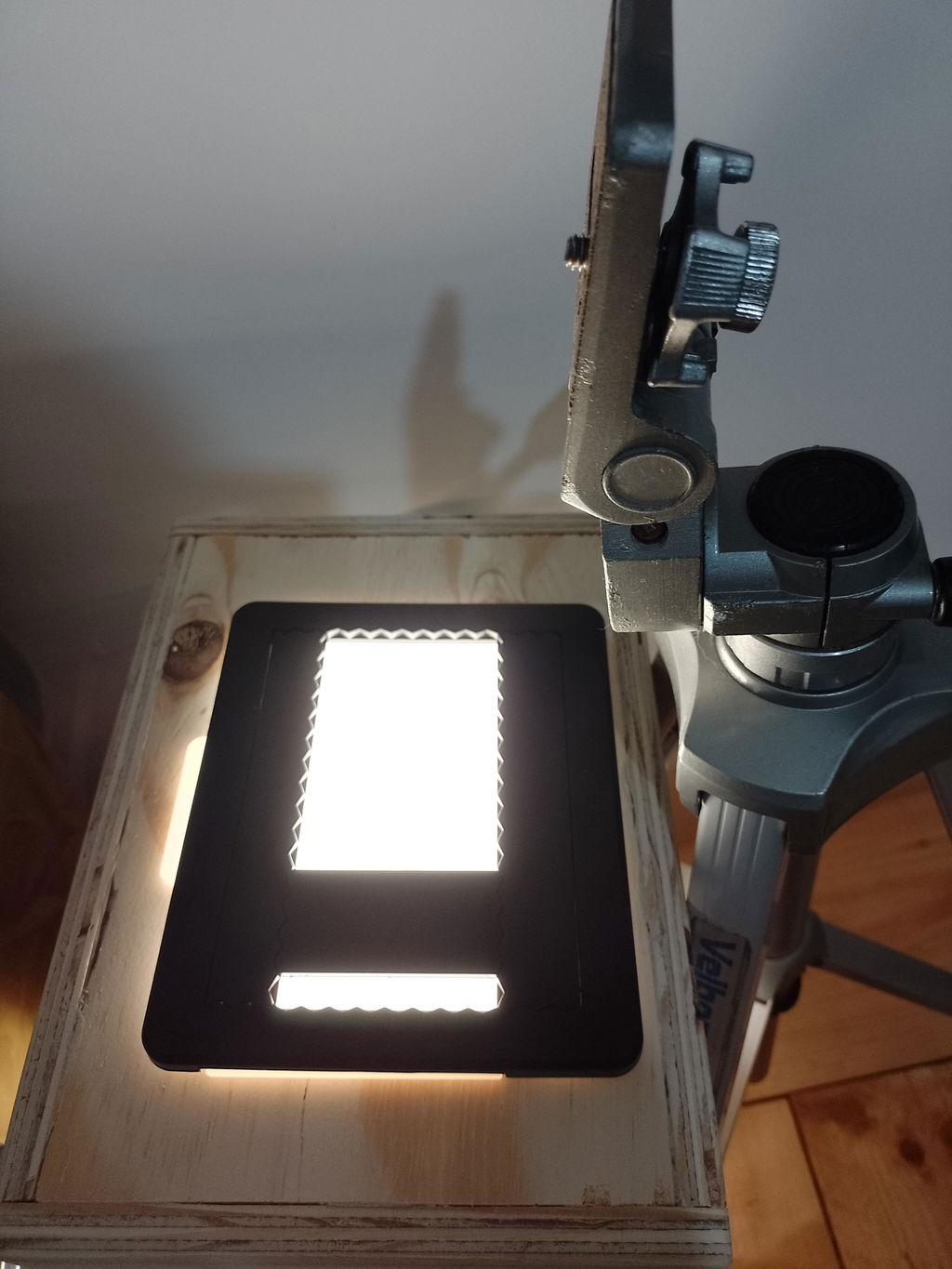
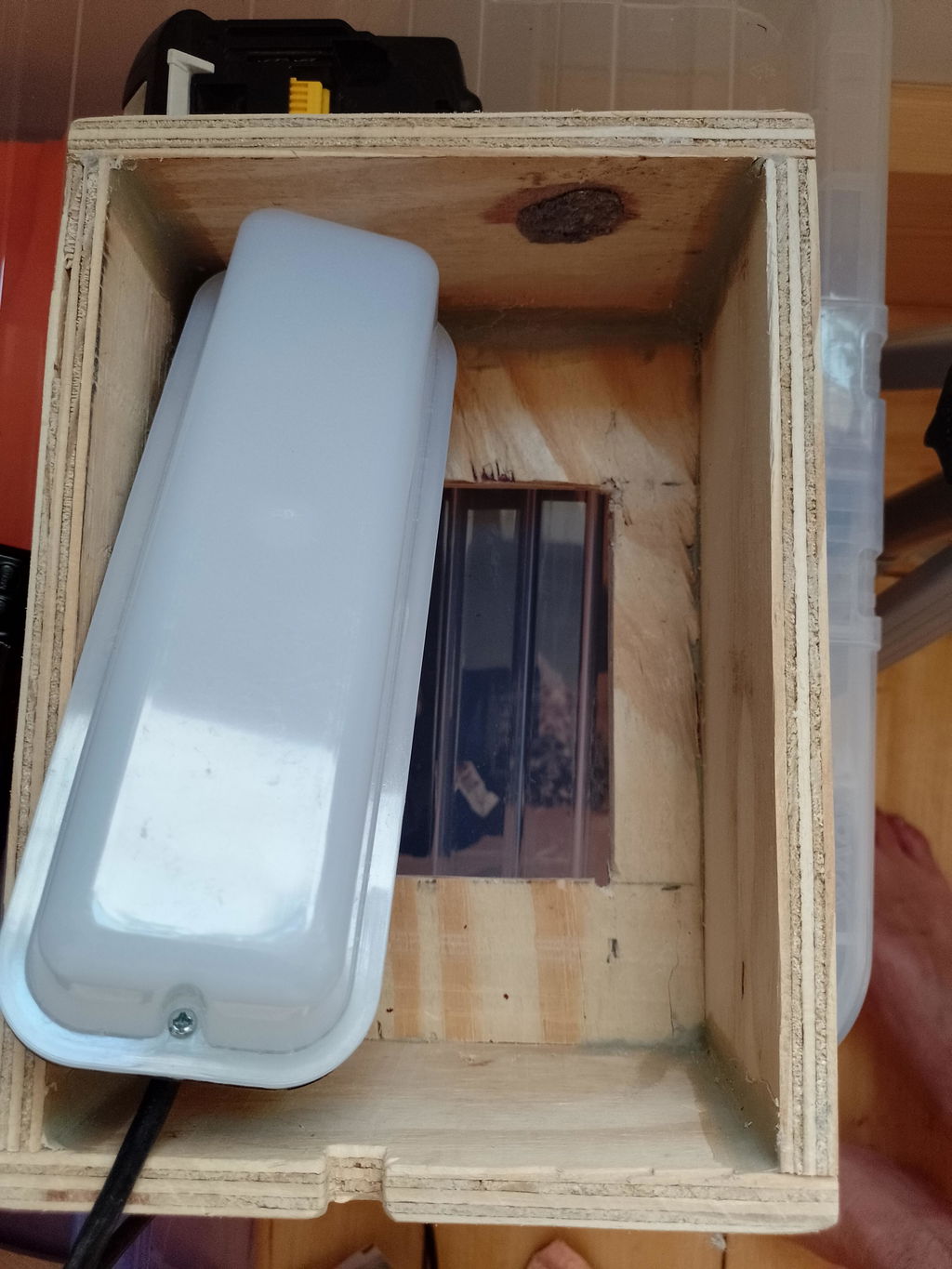
After posting on 35mmc and reading all the articles surrounding the different film holders, finding myself like many drifting towards 120 film, I was drawn to the price and 'one-stop shop' solution the Pixl-latr offered. Honestly, it's 3D printing roots show through with difficulties had getting a truly flat film plane, and similarly the need to get the masks for light creep at the edges, as well as a slightly fiddly way of moving the frames along.
But....
It works! You can do the different formats, with a little tape it will create a flat film plane, and also mask the worst of any light creep- and for such a low entry price compared to other options, plus easy availability and community support, it's worth giving a try- I've found with practice and time, results are improving, and the workflow pace increased. I would suggest anyone who is deciding with DSLR scanning vs. Flat bed reflects on how much time they really want to spend getting it done; DSLR isn't the quickest, especially whilst you learn to get all the pieces in sync, and I've seen just as pleasing results from Epson V-series, which require less hands on time.
Nothing is perfect, and if you are desperate for the best quality and results; send it to a lab like the Wonderlab (please, for the love of everything, make 120 C41 and E6n happen, I know you would do an amazing job- take my money!).
Had mine about 9 months now I believe and I really love using it. For camera scanning, it is a fantastic option at the price! There are more expensive options that have more features but the jump in price is a little ridiculous honestly. Big fan!
I developed my first roll of black and white film and used the pixl-ltr for the first time. I used the stand a torch and my mobile to get some quick scans.
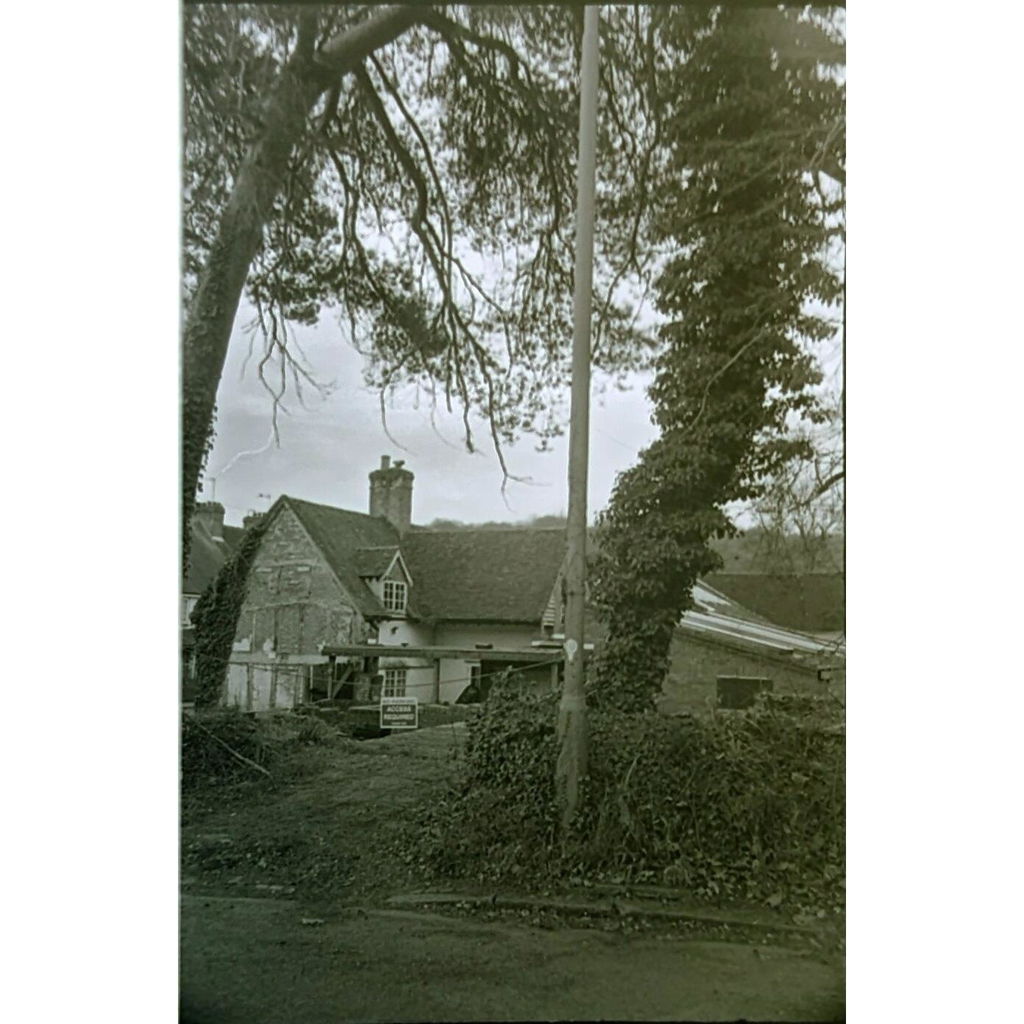
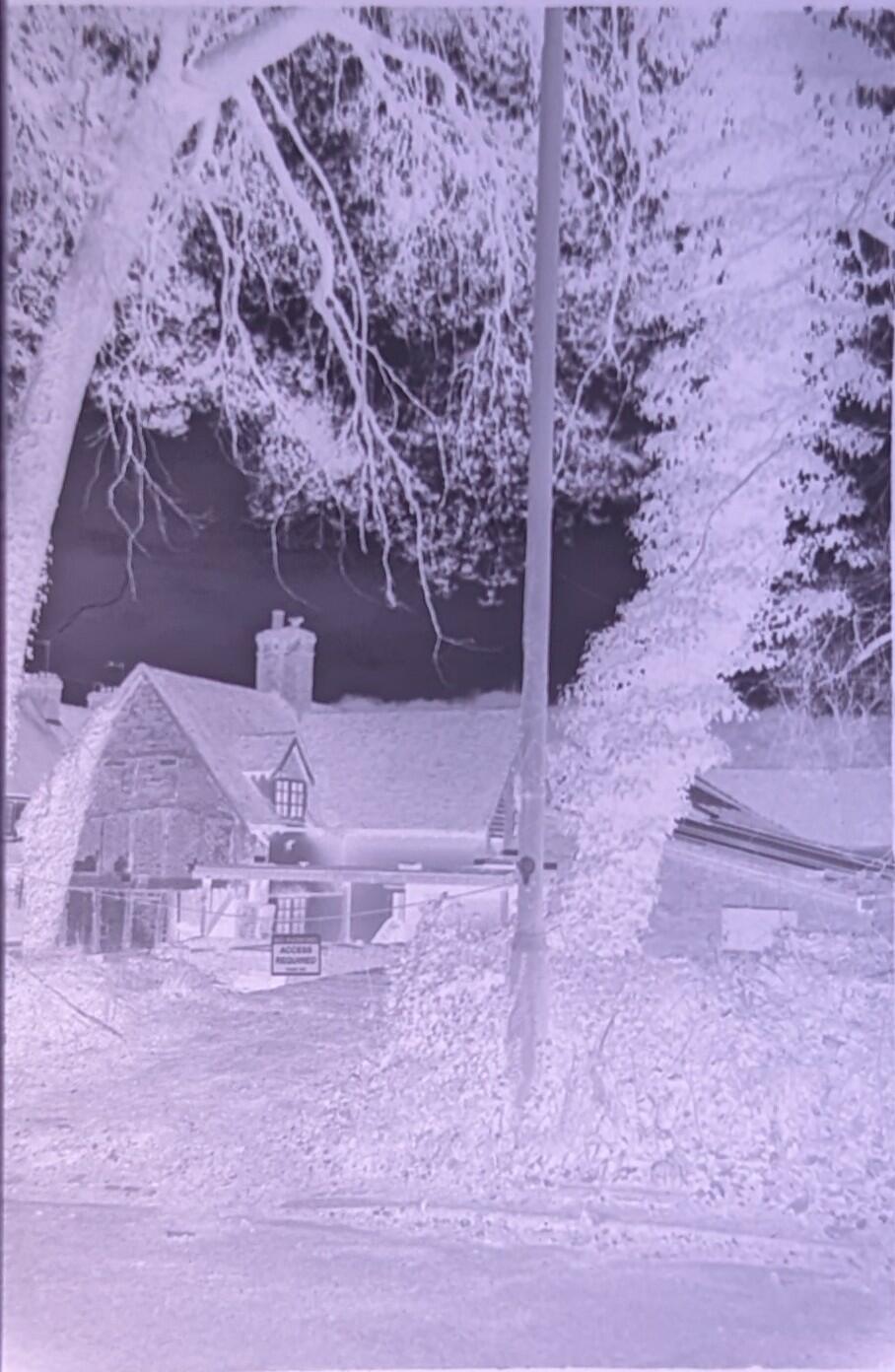
I have been dipping a toe into medium format film photography and I had been looking at buying a mask so I could chuck the piece of black card I had been using and do it a bit more professionally. Bodges are OK, but there comes a time when your negs need something better. There are several options on the market for silly prices and the Pixl-Latr is the cheap and cheerful one, but that doesn't mean it is lacking in quality. I like the design and the versatility of the Pixl-Latr to handle a range of film sizes that are most popular and there is also a few options for extra parts you can 3D print for slides etc. I also love the ease and speed I picked up the method of using the Pixl_Latr. There are a few simple instructions on the box and in a booklet and I was using it in a few short minutes. There's no moving parts, just interchangeable gates to suit your film and a diffuser. It's so simple and holds my film flat giving excellent scans with my DSLR. It's as easy to use laying flat on a light box for DSLR scaning as it is standing on the two legs supplied with it and shining an led light through it from the back for quick phone scans. I recommend this to anyone using 120 medium format, 4x5 large format and 35mm.
Many of the other reviews indicate that this product is flawed but most are still too kind. Like others, I read the reviews and thought I’m sure I can make this work and it is so much cheaper than the alternatives. But no, this is a poorly designed jigsaw of pieces that fall apart each time you attempt to advance a frame. There are insufficient guides to hold your film in place so when clamp the poorly fitting front and back together your film has moved and you have to fiddle around trying to get all visible again, you have to do this for every frame. Two hours to scan 12 shots! A complete waste of money. As someone else remarks, a piece of card with a hole cut in it will be as effective and less frustrating. I’m now looking at alternatives like the Lobster which seems to be infinitely more practical for not much more money.
The build quality is lacking, the parts are designed to have a friction fit but lack the friction. The use of the product has been designed to be mutli-format but 35mm is the worst experience.
You have to disassemble the product to slide a roll of 35mm in-between the two loose pieces of plastic which means getting a scan of the first shot is a pain in the arse and it falls apart way too easily.
Its an alright jack-of-all-trades, master-of-none product. It works but it is far from enjoyable. And all of that cheap plastic for close to £50 does make you wonder where they are getting their prices from, because its not a reflection of it's value.
OK, this is a great idea but it has issues that drive me nuts. The diffuser is lined up with the use of pins in the plastic and all the parts are loose in order to gain the flexibility but you have to pivot the frame from the diffuser for each frame on a roll. If you aren't careful this leads to it coming apart. Why didnt he just hinge it? The guides for each film size are just too tight on the film so you end up cropping the frame. It falls apart all too easily and you can spend ages putting it back together again when all you want to do is scan. The nice thing about it is, because of its modular nature you can buy after market guides which make the whole process a bit better, still far from perfect, but better. Like I said, its a great idea, it just drives me bonkers, so much so I am considering selling it and going back to the one I made in my kitchen, with gaffer tape!
Edit:I put some rubber feet on it to stop it slipping around. I also bought the Forster insert for 35mm, and another for 120. Huge difference. The Forster add ones are available from the Pixl-latr web site. These make the Pixl-latr a really good and less frustrating option
For me the product just didn't work. I had a large number of scans to complete to a tight deadline. It's just poorly designed. For the purpose I needed it had too many loose parts and it's really slow to use.
It would be ok for scanning the occasional neg but if you have a large batch don't waste your money.
As someone who had just started to develop B&W film at home, I was eager to see the results. I didn’t want to spend £100’s on a scanner just yet and bought this. Used with my laptop and an app on my phone I got great results!
This is a pretty cool alternative to taping up a bit of glass. The rubber feet hold it in place really well.
I bought this as I needed a scanning mask for 120 negs, using my DSLR, and this seemed to be the thing to have. I had exposed a roll of Lomography Metropolis of some rather interesting graffiti, all bright colours in a drab setting, perfect for Metropolis. When the time came to scan the 6x9 negs, using this device, I made the cardinal sin of not making sure everything was dust free, and as I pulled the film through this scanning frame there was a spec of dust got caught under the frame that absolutely ruined the negatives as I pulled them through, particularly the best frame on the roll....typical! Lesson learned there!
As for the design and use of this frame it is quite good but probably no better than a hole cut in black card.......!
Is this compatible with 127 film negatives?
Yep! You use the 35mm-T gate at the bottom and 120-B gate at the top - there will be a small gap but it should allow you to get great scans still.
The team over at pixl-latr are working on more bespoke gate options, so you can keep an eye on this page https://www.pixl-latr.com/community-gate-house/ for every format that's slightly more niche!
- Paul