
Recent posts


Shop the article


Film Camera vs Phone (Digital) Camera: Which Should You Choose
Film isn’t dead - your phone just made it harder. We’ve never had better cameras in our pockets, yet photos often feel more disposable than ever. That’s why more and more people are returning to film: not just for the “aesthetic”, but for the slower, more intentional process and the tangible, authentic results that come with it. It makes photography “mean something” again. Have you ever gone to a gig, show or even a fireworks display, shot some photos or recorded a moment or series of moments and never looked at those photos and videos ever again? It’s an all-true aspect of our culture and conditioning and is a symptom of convenience. Sometimes pocket-sized cameras with incredible lenses and in-built editing features can be hard to compete with. So which do you choose, and when?
We’ve broken down the appeal of film versus the convenience of phone and digital photography, why editing can’t fully replicate the feeling of shooting analogue, and how our community actually shoots when they have both options to hand. Read on to discover why analogue photography is becoming a preferred choice over its digital counterparts.
The Appeal of Film Over Digital
Shooting film is as much about the process as it is the final image. It’s the whole experience of carefully selecting a film stock and camera combination, getting out and shooting it and patiently awaiting the results. Whereas with digital photography, it’s often focused on the former: the output. Snapping away frame after frame holds way less meaning when your images get lost in the ever-growing ether of your camera roll… where photos go to die. 🫠
And while digital has its appeal - with the increasing demand for speed, instant gratification, and a seamless user experience - the needs of our modern society have shifted from precision to imperfection. Modern film photographers - and wellness-conscious people looking for a new hobby - often value slow, intentional art forms over the fast-paced, "humanless" habit of constantly checking an LCD screen (aka “chimping”) and missing the moment.
Film puts the soul back into photography. It’s a slow, mindful and tactile practice - and those are just some of the many reasons why an increasing number of people are turning to film as their chosen photographic medium. In recent years, many of us (especially the younger generation) have been seeking screen-free ways of living and creative hobbies - leaning into analogue mediums like film photography, vinyl records, and physical books, all of which remind us of the importance of being present. Digital and phone photography offer a very different experience - it’s fast, competitive, and disposable - which can leave you with images lacking meaning and intentionality.

Analogue hobbies are in demand! Between April and September in 2025, global searches for the term 'screen-free' rose by 257%, while 'analogue' grew by 75% between October and November.
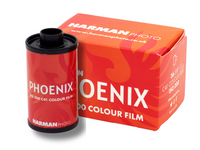
Last spring, I photographed Kew Gardens on my Olympus OM10, loaded with Harman Phoenix and Kodak Pro Image, AND took some snaps on my iPhone 14 phone for a quick comparison. I must say, I much preferred the results shot on film! They had much more character, a warm colour palette and a soft, shallow depth of field. Whereas the phone photo is vivid and crisp - almost too clean!

Kew Gardens Waterlily House captured on Olympus OM10 with Harman Phoenix 35mm film (left) and iPhone 14 (right).
The Convenience Of Phone Photography
Naturally, our smartphones have become permanent counterparts in our everyday lives, always with us. Research in 2023 from photo printing chain Max Spielmann said that over 90% of daily photos are now captured with smartphones rather than professional digital cameras or film cameras. With that convenience comes speedy, reactive photo taking - and less room for deliberate thinking. Digital allows us to streamline the process between shooting, editing, and sharing so there’s no time to pause. This all makes photography feel effortless, which may be appealing for some. But does it make it more meaningful? We think not! Put it this way: how often do you print, frame, and display your phone photos? As analogue photography is a tactile process that requires far more time, thought, and creativity, printing those images is a fitting end - and one that does your images far more justice than if they were left hiding in your phone’s camera roll.
That said, as major smartphone giants like Apple release new, updated models every year, such as the latest iPhone 17 Pro which they say has the ‘ultimate Pro camera system’, it can be difficult to compete with such convenience. And this model really does pack a punch when it comes to image quality, boasting features such as a 48-megapixel lens with options to zoom 8x (200mm) or get up close with macro, an ultra-wide 13mm lens, and the ability to set in-camera presets to define your personal editing style.

More and more businesses use smart phones for their photography needs over digital kit to create assets more easily and efficiently. © Apple

If a phone can make images like this, it’s no wonder hiring a photographer with expensive gear feels less appealing - even if their work is usually way more impactful. © Apple
Sure, phone and digital photography have their advantages and naturally form part of our relationship with photography. Snapping away on our phones is appealing for its instant gratification, easy social sharing, and click-of-a-button print ordering. Sometimes convenience and speed does trump intentionality and forward planning, and that’s fine! Digital photography has its place, and so does film.
Replicating The “Film Look” On Digital
The question “Why shoot film when you can just apply the film effect digitally?” crops up more than often among creators, or those outside our analogue space. And we’re not going to lie - it definitely sparks a little rage 😆 It’s a valid question yes, but you can never replicate the process or feeling of shooting film by simply sliding the “Add grain” scale. Yes, digital edits can get close to the “film look” with grain, colour shifts, and experimental effects like light leaks. But even the best presets feel slightly too perfect compared to the results you can get from film. You can copy the style, but not always the feeling.
Sometimes we love to cut corners and get instant results, but that can mean we’re not putting in the hard work and challenging our creative abilities. We’re letting our device do it for us. That simply doesn’t have the same impact or satisfaction that using a vintage, manual SLR analogue camera does.
With all these digital advancements, practically everyone and anyone thinks they’re a photographer because they can take great photos on their high-tech camera phones. That’s not a dig of course - the more beautiful photos we have of the world, our adventures, and our loved ones, the better! But this does create an over-saturation of content. That’s where real, characterful analogue images really shine. Film photography isn’t just surviving - the global film photography camera market was valued at around USD 1.1 billion in 2024, with continued growth expected in 2025 as interest in analogue formats rises. Even with this resurgence, film still feels like a rare gem in a sea of AI-generated images and quick phone shots. It really is the original Instagram filter…
The Community’s Shooting Habits
Now, there’s plenty of professional photographers that flit between their phone, digital camera, and film camera - because each one has its own advantages. Most of us use both. Film is loved for the process and the results, while phones and digital cameras win for speed and convenience. The common option? Whatever format keeps you excited to keep shooting. There’s no wrong choice - just different tools for different moods and purposes.
Personally, I’ll usually take a photo on my phone “just in case” and to frame up the shot, then capture it on film - but this can also work the other way round depending on the scene in front of me. When you can share meaningful moments to social media in an instant, getting the shot on your phone makes total sense. Then the creative film version follows later, once it’s been developed and scanned by the Analogue WonderLab!
We asked our AW community of film shooters on Instagram and Facebook what they reach for first when armed with both their phone and film camera. Combining responses from our two Instagram polls, the stand-out choice was 'film camera then phone' with 51% of votes, followed by 'film only, no screens please' with 38% of votes, and 'phone then film' with 13% votes. In the comments, the majority of people said how they rarely ever take photos on their phone anymore, forget to, or only do so for quick snaps and easy sharing. One response from @mummy_barrow indicates the transition from digital to film, “I've taken 140,000 photos on my phone over the years but since picking up a film camera this summer I've shot almost 100 rolls and rarely use my phone camera anymore!”

A quick-look at some of the poll responses on our Instagram Story, where the “Film camera then phone” option came out on top!
So it seems that once you’ve got your film camera in hand, the choice becomes both deliberate and surprisingly easy. You’ve already decided that this is the moment to put creativity and experimentation first, and to prioritise a slower, more mindful way of shooting over quick disposable results. We see the world differently through different lenses - phone, digital, film - and when you choose analogue, you’re choosing something more honest, more tactile, and more real. (Unless you’re turning everything into a post-apocalyptic fever dream with something like Harman Red… but you get the point 😅)
Remember: the camera is just the tool - you are the one in control! It can only do so much on its own, but in the right hands and with the right eye, it becomes an extension of your creative vision. So whichever format you choose, don’t forget the reason why you’re taking the photo! Regardless of if you’re team 'film first', 'film only', or 'phone then film', the real win is staying inspired and keeping creativity alive.
Have you got a favourite film stock that makes you fall in love with shooting all over again? One that stops you from reaching for your phone or digital camera? Share your thoughts with us in the comments 📸💬
Ready to dive in?
Keep Reading
View all
Halloween Has Arrived at AW: Spooky Stickers, Creepy-Cool Tees & Films for Darker Days
It's Spooky Season here at Analogue Wonderland and we love to sink our teeth into new products, horror designs and of course, the best films fitting for this time of year.
Kodak Summer Competition 2026 - Winners Announced! 🏆
We announce the winners of this year's Kodak Summer Competition!
- Opens in a new window.