


Shop the article
Processing Black and White Reversal Film
Happy news for monochrome specialists: we are now able to process black and white reversal films in our WonderLab!
This is an exciting progression on our mission to process all films currently available to analogue adventurers - read on to learn more about the art of developing black and white reversal film.
(Please note: this service is currently paused, as of October 2024. We will share when it is available.)
What is B&W Reversal film?
Reversal film is another name for slide film. When you hold the developed pictures up to the light, you'll be able to see the scene as you shot it rather than the 'negative' of the scene.
This means that you could use a projector to display the images with nothing more than a light source and blank wall. But it also has benefits for photographers who don't like the process of software reversal of scans - the necessary process to digitally view images that have gone through traditional negative development.
Technically we can reverse-develop nearly all black and white films - but most modern films come on a non-transparent base which will ruin the pure effect.
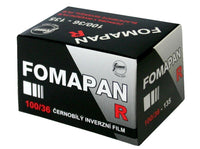
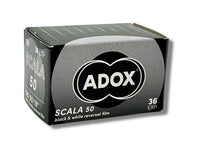
The best films for reversal come on clear plastic bases so that you can view the results in perfect monochrome! At the moment we have quality-tested recipes for Fomapan R 35mm and Adox Scala 50 - with more to come.

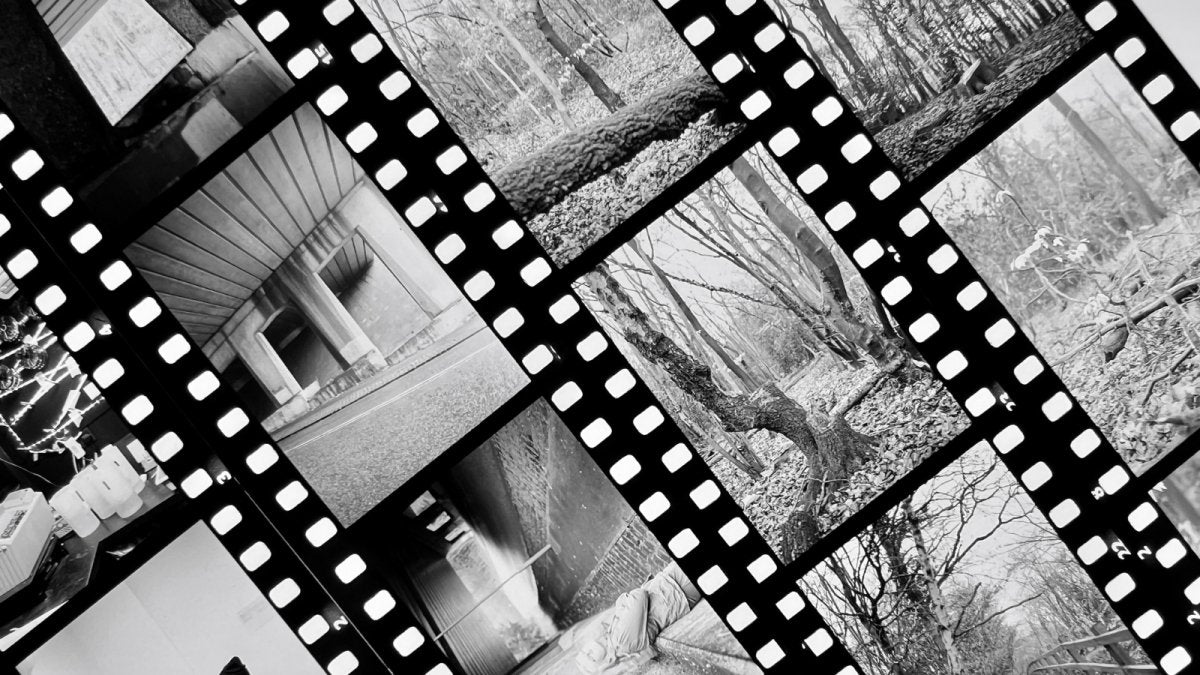
This is a direct photo of Adox Scala 50 reverse-developed and lying on a lightbox - straight from my iPhone!
What can you expect from B&W reversal development?
You will get gorgeous 'positive' images that can be immediately viewed, projected, or scanned to retain your original photographic vision.
It also gives you more opportunity to experiment with mixed media - because the images are pure transparencies they can be incorporated into artwork that blends drawing, painting, and photography without the need to make prints.

Photo taken on Adox Scala 50 and developed in B&W reversal chemistry (c) Alex Cole
How do we reverse develop your black and white film?
You may have noticed that this type of development is rarer than the common 'negative' development. That's because it requires specialist chemistry - which in return requires more steps, alongside greater expertise and care.
We have a dedicated darkroom in our lab for B&W developing, alongside equipment (and technicians!) that are able to work with different chemistries and processes in a controlled environment.
Each film has a slightly different processing recipe. We run extensive tests - sampling multiple film strips - before we offer the process to customers. This means that you can be 100% confident in the results you'll get back.
Ready to dive in?
Keep Reading
View all
Top Tips with the Kodak EC35 Film Camera - Sample Shots on a Disney Cruise
Paul takes a Kodak EC35 film camera on board a Disney cruise ship to test its suitability on a fast-paced family holiday
Film Photographers 🫱🏼🫲🏾 Bouldering
Our Analogue Adventurer headed into a dark and chalk-filled climbing gym to try and learn how to take fantastic bouldering photos on film
- Opens in a new window.
7 Comments -
Francis Theaker • -
John Allsop •
← 1 2
Is it still possible to develop Adox 160 ASA Reversal film in your lab? I think Adox 160asa was discontinued around December 2021 and this is the last of my Adox 160 anyway as I will use the Formapan brand next. Also what would the cost be? No cutting of finished roll or frames is required.
Unfortunatly when we click on developing lab it says film development C41 and info about prints and scanning, i need the info and price for developing FOMAPAN R 35 mm and 120 black and white slide film.